Body
Pricing a service business is not just about choosing a number that feels reasonable. Your price needs to cover your labor, supplies, travel, overhead, payment fees, and still leave enough profit to make the business sustainable.A simple pricing process can help you avoid undercharging and make your quotes more consistent.
1. Calculate Your Labor CostStart with the total amount of time required to complete the job.Do not only count the time spent at the customer location. Include setup, preparation, travel, cleanup, and any other time directly related to completing the work.If more than one person is working on the job, calculate total person-hours.For example:2 people × 3 hours = 6 person-hoursThen multiply the total person-hours by your labor cost per hour.
2. Add Supplies and Direct Job CostsInclude the costs that increase when you complete a job.Examples may include:• Cleaning supplies • Chemicals • Fuel • Equipment usage • Disposable materials • Packaging • Travel costs • Payment processing feesThese costs should be included before calculating your profit.
3. Include Business OverheadEvery business has expenses that are not tied directly to one job.Examples include:• Insurance • Software • Advertising • Phone and internet • Equipment replacement • Office expenses • Licenses • AccountingYour pricing should contribute toward covering these costs.Ignoring overhead is one of the easiest ways to think a job is profitable when it is not.
4. Calculate Your Break-Even PriceYour break-even price is the minimum amount you need to charge before making a profit.A simplified calculation is:Labor + Direct Costs + Allocated Overhead + Fees = Break-Even CostCharging below this amount means the job may be losing money.
5. Add Your Target Profit MarginOnce you know your true cost, decide how much profit you want the job to generate.Profit margin is different from simply adding a percentage markup to your cost.A target-margin approach can help you price more consistently and understand how much profit remains after the job is completed.
6. Compare Estimated and Actual ResultsPricing does not end when the customer accepts the quote.After completing the job, compare:• Estimated labor hours vs actual labor hours • Estimated costs vs actual costs • Quoted price vs final revenue • Expected profit vs actual profitThis is one of the most important steps because it helps improve future pricing.
7. Build a Repeatable Pricing System
A structured pricing system can help you avoid calculating every job from scratch.For service businesses such as cleaning, mobile detailing, lawn care, pressure washing, pet care, and other local services, a good pricing system should help you:
• Calculate job costs • Build accurate and consistent quotes • Account for labor, materials, overhead, and fees • Protect your target profit margin • Track completed jobs • Compare estimated results with actual results • Review business performance over time The goal is not simply to charge more. The goal is to understand what each job really costs and price your services in a way that supports a healthy and sustainable business.
Looking for a Faster Way to Price Your Services?
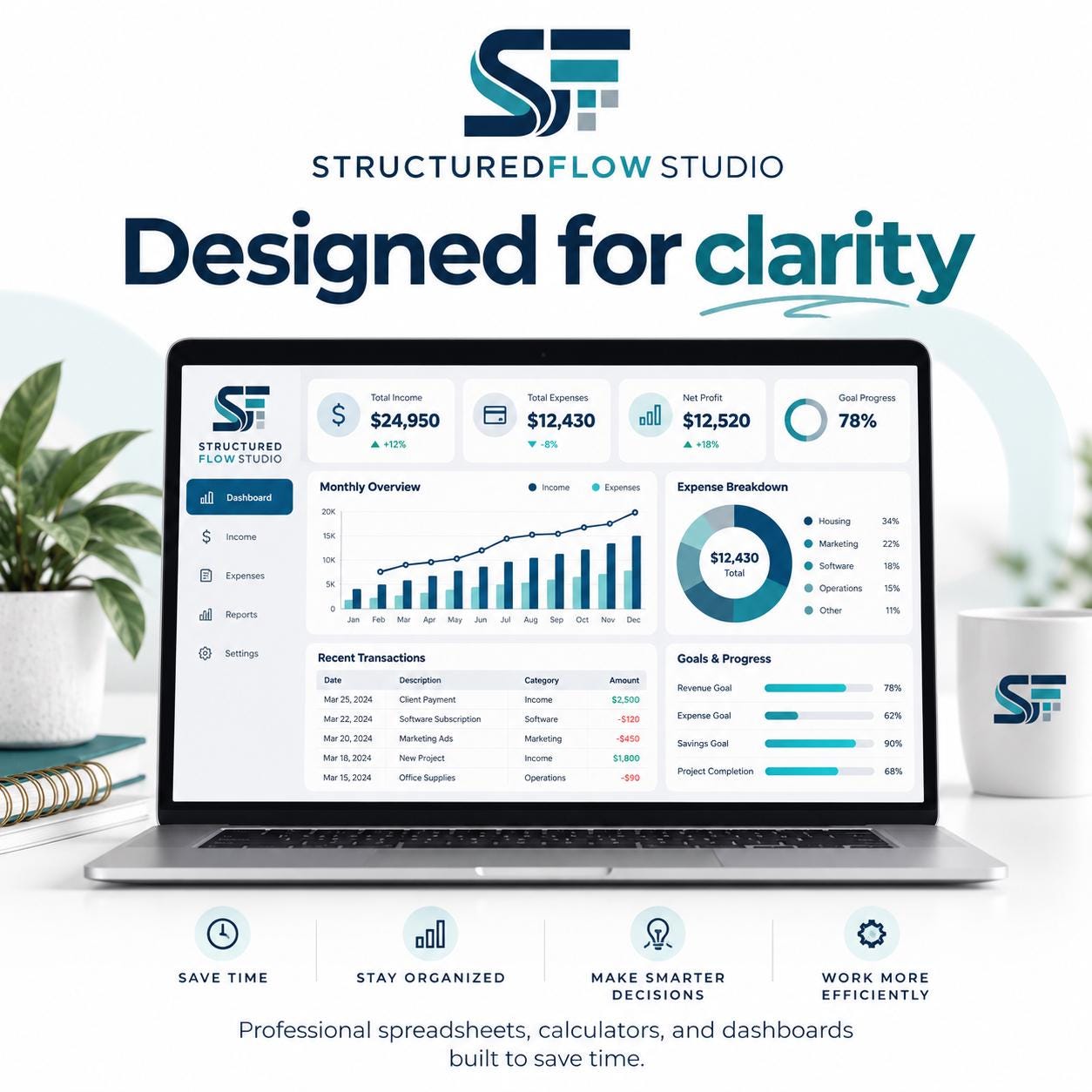
Structured Flow Studio creates practical Excel pricing calculators, quote builders, profit trackers, and business dashboards designed specifically for service businesses.Our tools can help you calculate job costs, build more consistent quotes, track actual results, and understand how much profit each job is really generating.Whether you run a cleaning business, mobile detailing business, lawn care service, pressure washing business, or pet care business, you can use a structured system instead of rebuilding your pricing calculations from scratch for every job.
Explore Structured Flow Studio’s service business pricing tools →
Final Thought
Good pricing gives you clarity.When you understand your labor, direct costs, overhead, fees, and target profit margin, you can make better pricing decisions with more confidence.The most effective pricing system is not necessarily the most complicated one. It is the one that helps you consistently understand your costs, quote your work, measure your results, and improve your pricing over time.
Structured Flow Studio Simple Tools. Smarter Business.